



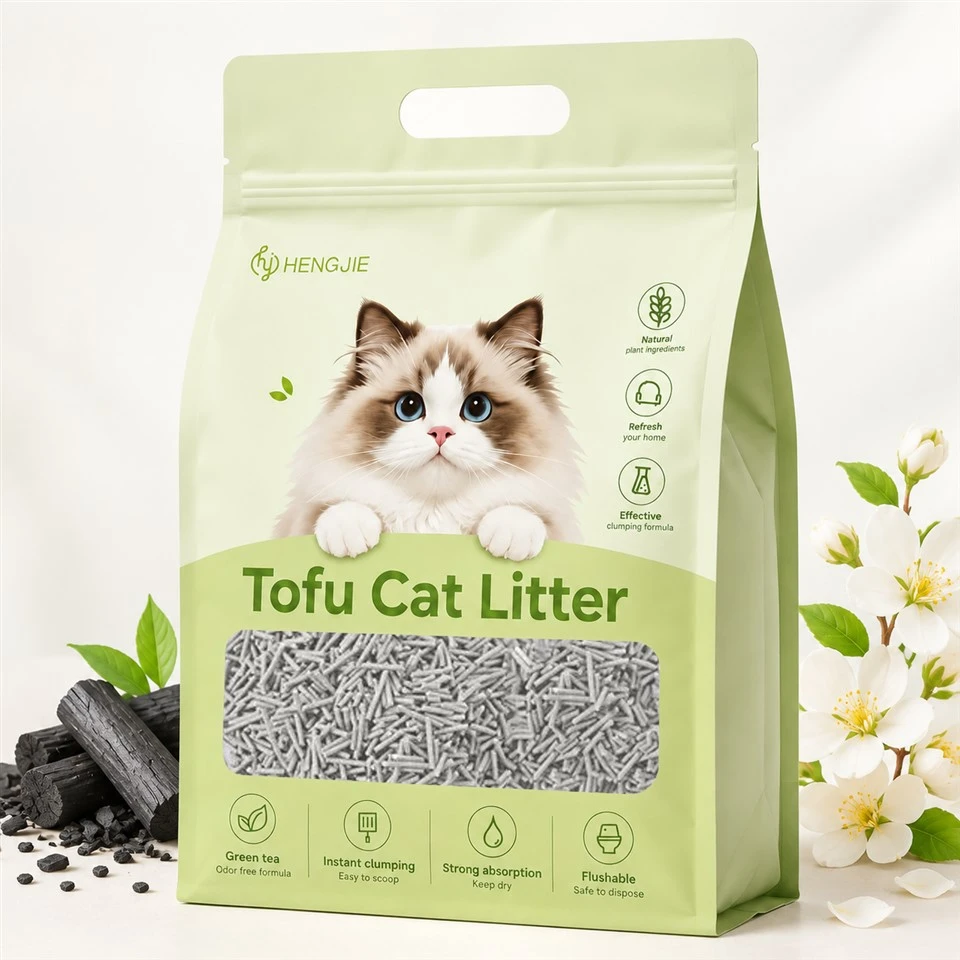


Liaoning Hengjie Pet Products Co., Ltd. is one of the most reliable manufacturers and suppliers of tofu cat litter charcoal in China. With a professional production team, we are able to provide high quality pet products for global clients. Welcome to buy customized tofu cat litter charcoal at competitive price from our factory. Contact us for quotation and free sample.
Charcoal Tofu Cat Litter - Plant-Fibre Clumping with Charcoal Odour Control, 3,000 kg MOQ
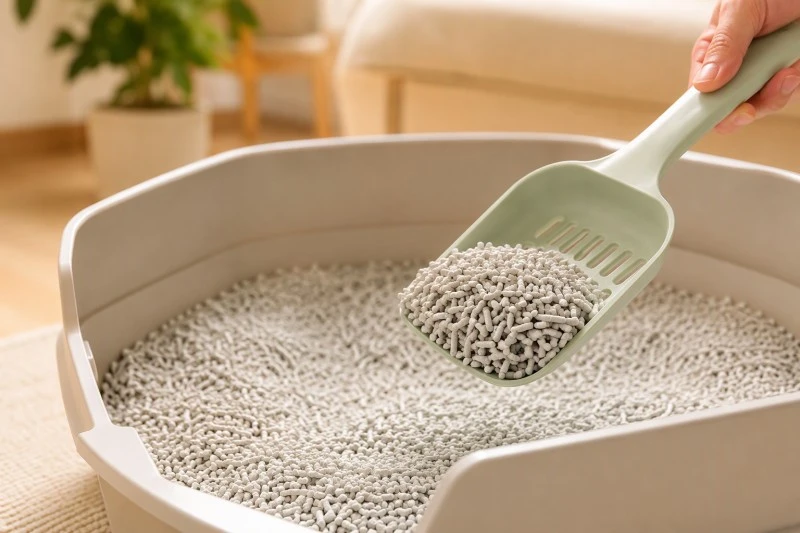
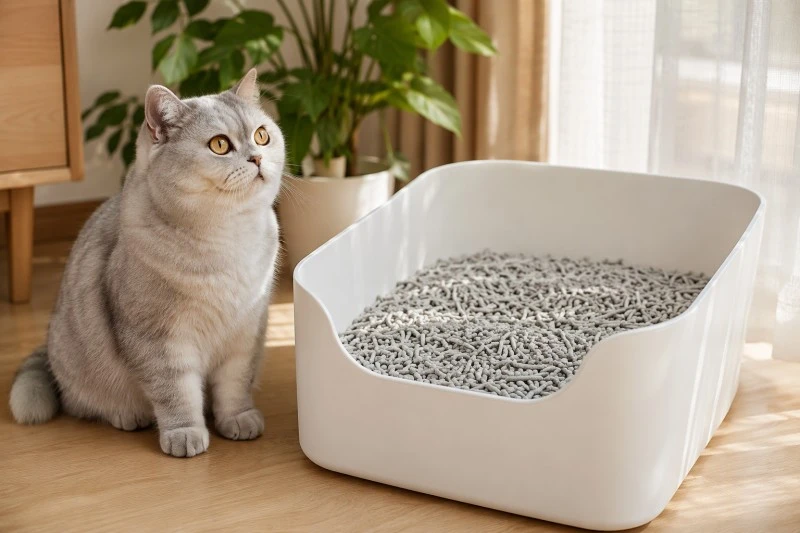
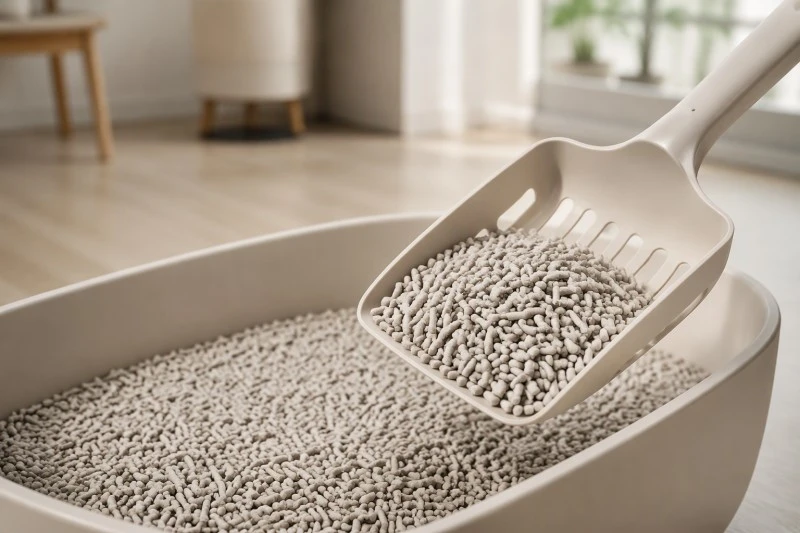
This is a processed soybean-residue tofu litter with charcoal integrated as a functional component in the granule itself, not a standard tofu litter with charcoal dusted on after drying. The base material is processed plant fibre; the charcoal is worked into the formulation before granulation, which means the dark colour runs through the pellet rather than sitting on the surface. For a buyer comparing suppliers, the relevant question is not whether charcoal appears on the ingredient list. It is whether the charcoal is uniformly dispersed, whether clumping and absorption stay within the agreed range across production lots, and whether the factory can repeat the same particle-size distribution on a reorder six months later.
Hengjie has run bentonite mining and cat litter manufacturing from the same group since 1993, with two factories in Liaoning and Anhui and an annual output of 400,000–500,000 tonnes. The tofu line is part of a wider plant-based programme that sits alongside the group's mineral litter operation, which matters for buyers who want a supplier that already understands clumping chemistry, dust behaviour, and export packaging across more than one litter category.
| Parameter | Hengjie B2B range |
| Base material | Processed soybean residue |
| Functional component | Charcoal-based odour-control material |
| Granule diameter | 1.5 mm / 2 mm / 3 mm, or to your specification |
| Granule length | Set at order confirmation |
| Colour | Dark / charcoal; shade defined in the approved sample |
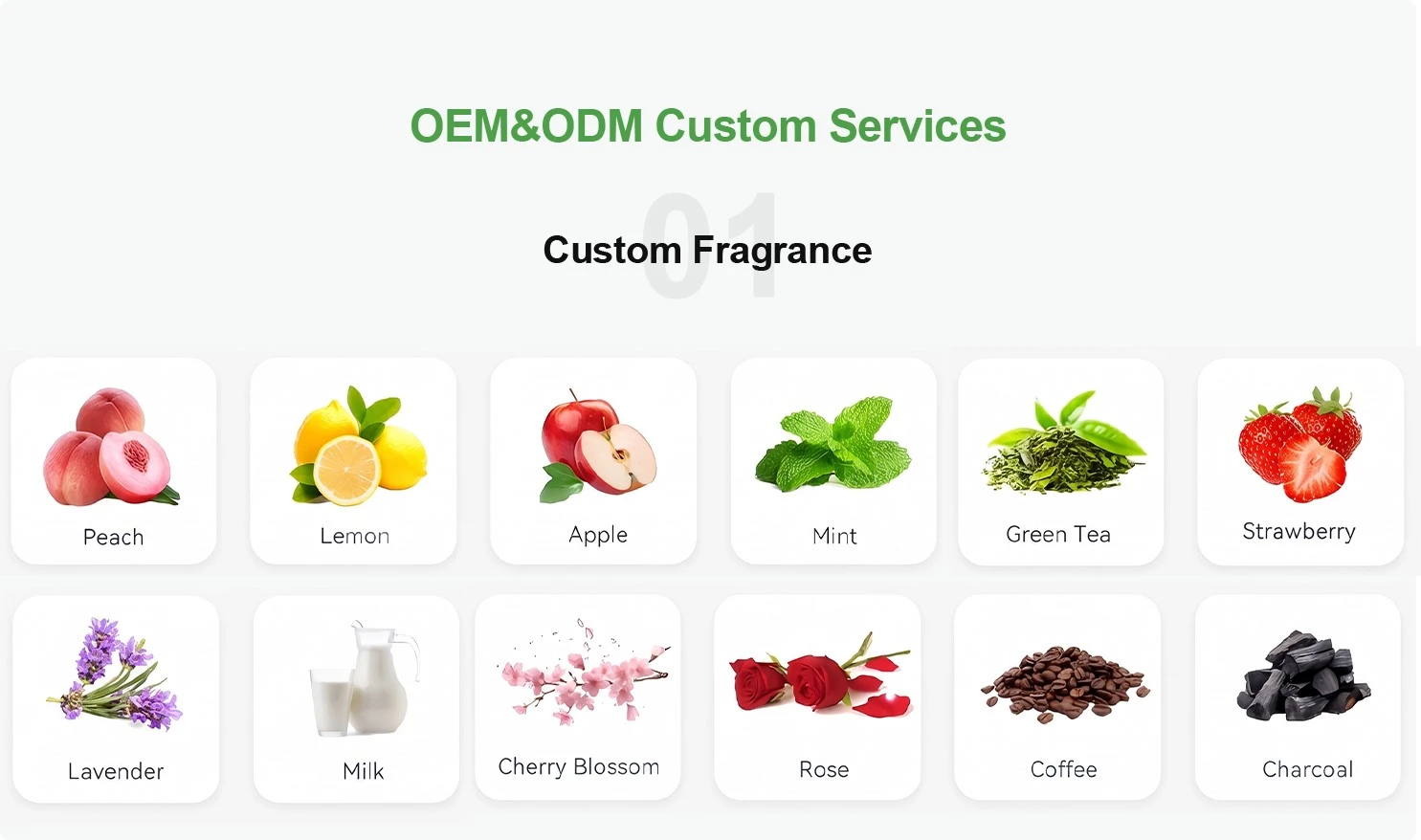
| Fragrance | Unscented or selected fragrance |
| Water absorption | Tested to the agreed method; typical target ≥300% |
| Dust level | Controlled to the approved specification; tofu line typically ≤1% |
| Clumping | Available; clump integrity checked per lot |
| Bulk density | Confirmed by product grade |
| Bag weight | Customized |
| MOQ | 3,000 kgfor this product |
| OEM / ODM | Formula, particle size, fragrance, colour, packaging |
The absorption and dust figures are not fixed catalogue numbers stamped onto every order. They are target ranges confirmed against the method your QA team wants used, then checked in production and retained on the lot record. A charcoal formula can shift both absorption speed and clump hardness if the charcoal load is raised without adjusting the starch-to-fibre ratio; Hengjie sets those ratios at the trial stage so the approved sample and the bulk production run behave the same way.

Dust, clumping, and the repeat-order problem
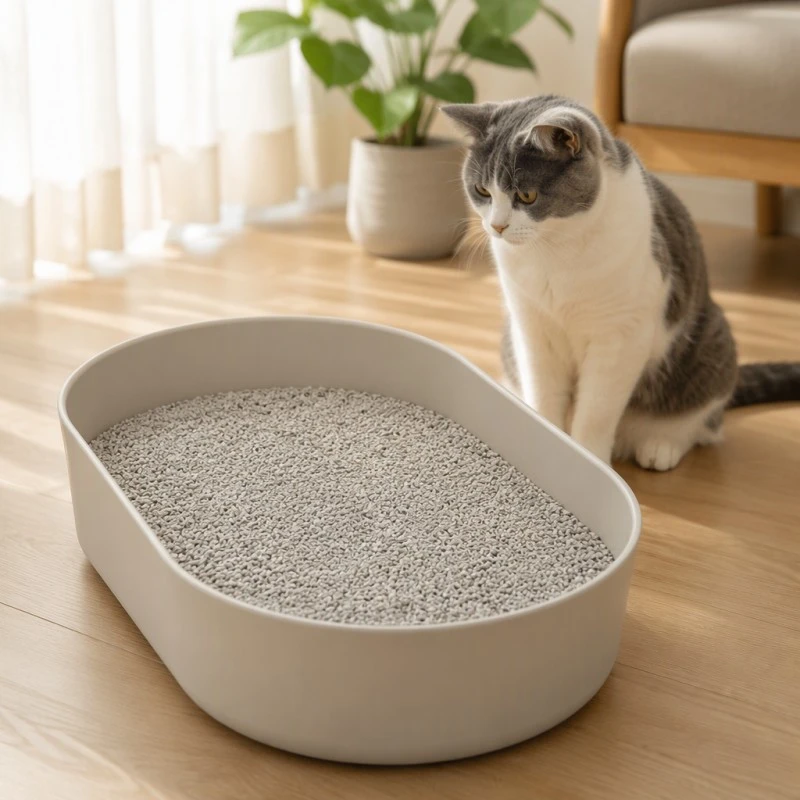
Dust in tofu litter comes from two places: fines generated during drying and screening, and surface material that rubs off the granule in the bag. Hengjie runs the tofu line through mixing, granulation, microwave drying to ≤10% moisture, and rotary screening before packaging. The screening step removes undersized fragments; the dust figure on the specification sheet refers to what remains after that step, measured on the finished granule.
For a 3,000 kg order, the practical risk is not usually the first shipment. It is the third or fourth reorder, when a different raw-material lot or a changed drying curve produces granules that look the same but scoop differently. Hengjie holds the approved sample as the reference for granule length, colour depth, and clump behaviour, and production lots are checked against it before packaging. Buyers who need a formal retained-sample protocol can request it at the quotation stage; the sample stays with the order file and travels with the production record.
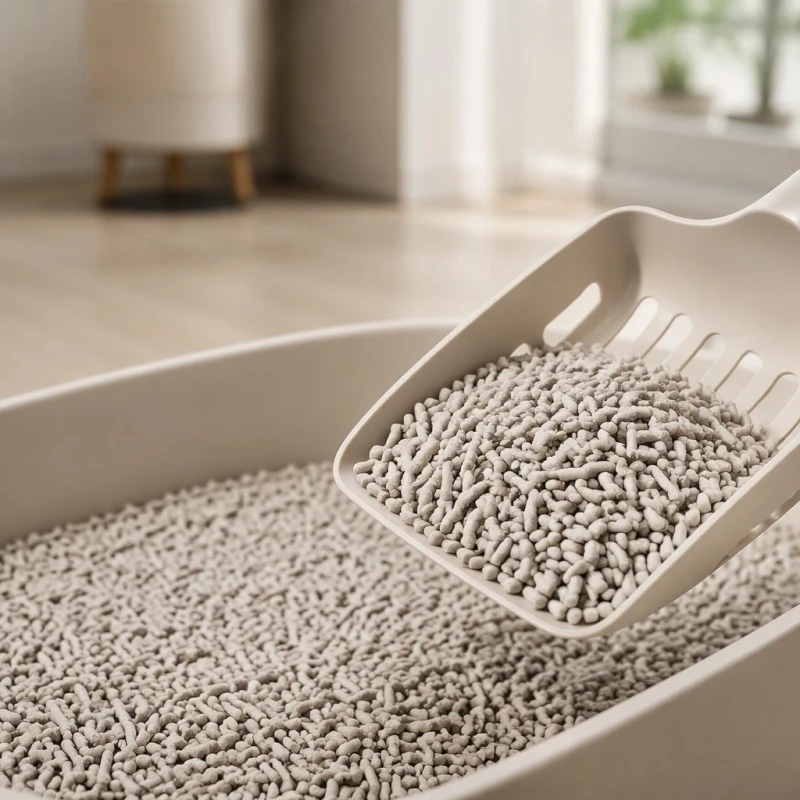
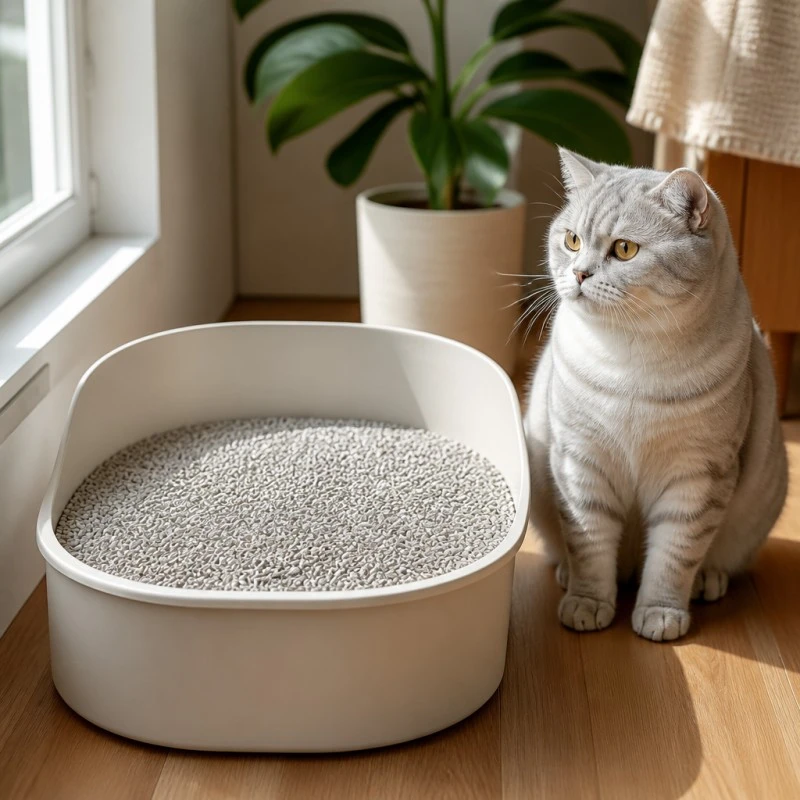
Clump strength is checked as a production parameter, not only as a marketing claim. A charcoal tofu granule that is too soft breaks during scooping; one that is too hard can resist dissolving in the toilet. The target is a clump that lifts cleanly from the tray and breaks down in water within the flushable-use instructions printed on the bag. If your market sells primarily to multi-cat households, say so at the trial stage - the fibre-to-starch ratio can be adjusted toward a firmer clump without leaving the tofu classification.
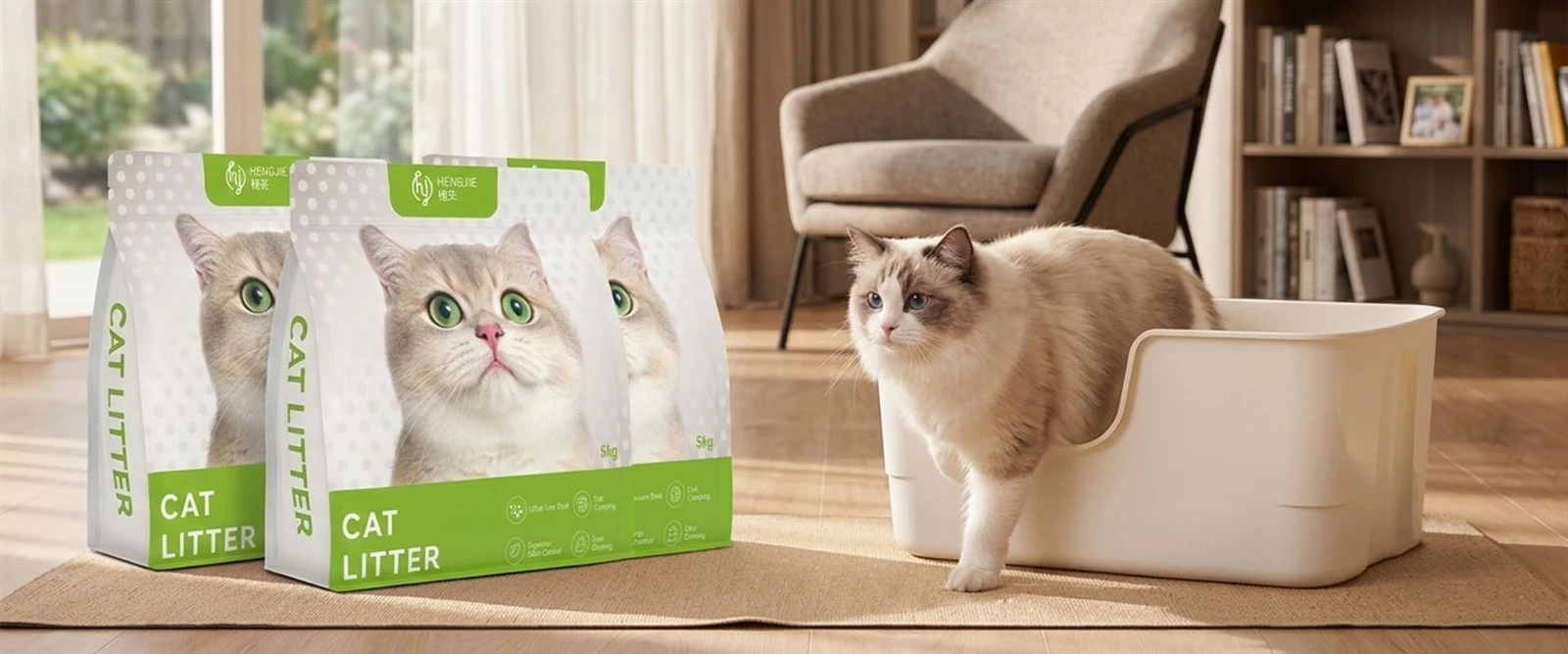
The Functions and Limitations of Activated Carbon
Charcoal acts as an adsorbent in the granule; it does not create the clump. Clumping comes from the plant-fibre and starch matrix. Position the product as a plant-based clumping litter with added odour control, not as a charcoal product that happens to clump.
Charcoal load is adjustable: darker, higher-load versions for private label, or lower-load formulas closer to standard tofu colour. Fragrance is separate, and unscented remains a standard configuration.

Years of History
-
Raw Material Mixing -
Extrusion -
Extruded Cake Drying -
Crushing -
Secondary Drying -
Packaging -
Finished Product Warehousing
Raw materials undergo twin-shaft mixing with water added to achieve a moisture content of 16%–20%. (Note: Alkali addition is required for producing premium-grade products, whereas ordinary ore sand does not require it.)

The mixed raw materials are fed at a constant rate into a twin-roll extrusion machine to form cakes. These cakes are then stockpiled for a minimum of seven days before drying.

The extruded semi-finished products are fed into a dryer; the temperature is controlled to reduce the moisture content of the granules to 3%–5%.

The dried semi-finished products enter the crushing hopper and are conveyed via belt to a vertical-shaft crusher. The crushed granules are screened; those meeting the 1–2 mm or 1–4 mm specifications are collected in bulk bags, while granules larger than 4 mm are recirculated through the crusher.

The screened granules undergo a second drying process to reduce moisture to ≤3%. They then pass through a rotary screen for final sizing and are collected in bulk bags, awaiting coating and packaging.

Packaging is performed according to production order requirements. Before packaging, materials undergo vibrating screening for dust removal, and a "first-article inspection" is conducted; packaging proceeds only if the product meets quality standards regarding clumping and dust levels. During packaging, attention is paid to batch coding, bag weight, sealing, quantity, and the attachment of accurate identification tags.

Finished products are stored in the warehouse according to established protocols, sorted by product type and arranged neatly.

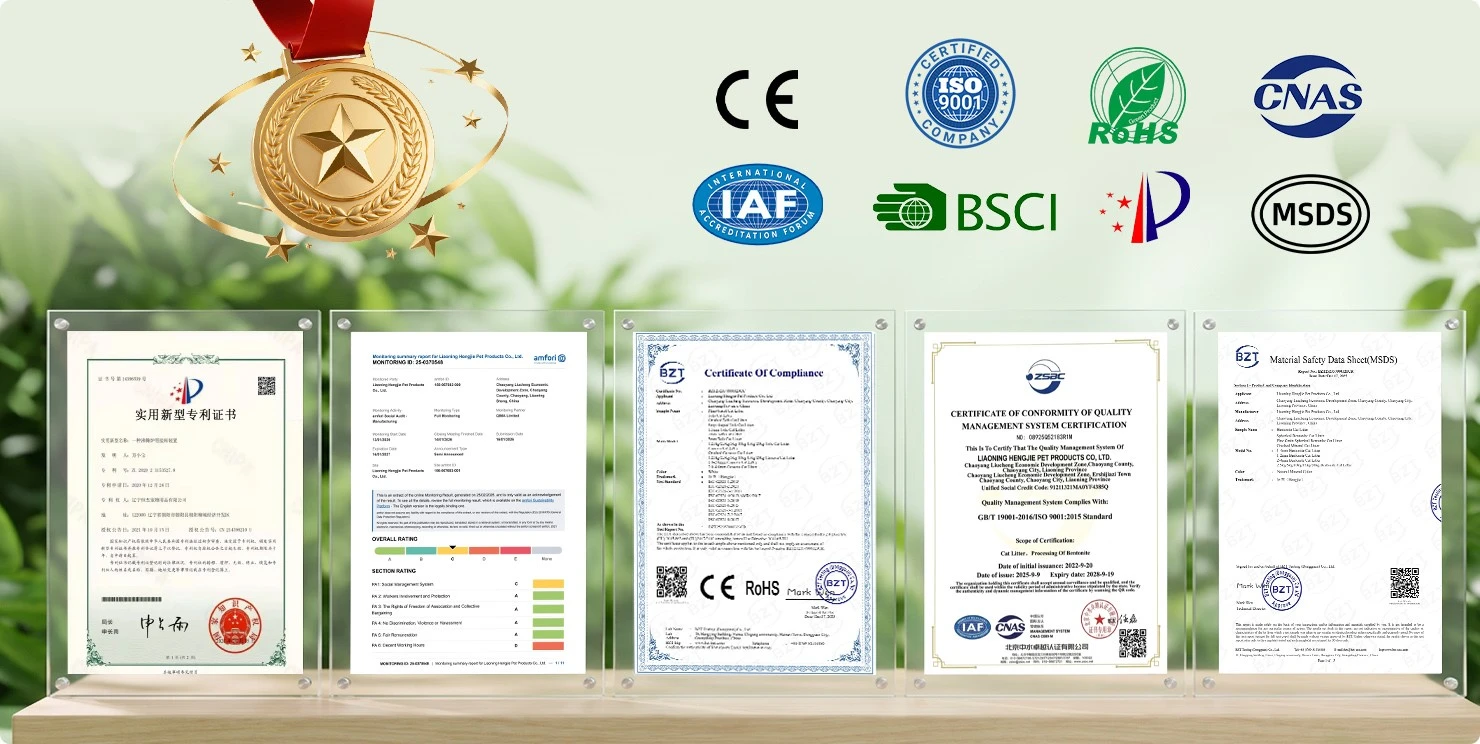
Certificates
Company Team

FAQ
Q: Does the charcoal affect clumping strength compared with your standard tofu litter?
A: It can, if the charcoal is added without rebalancing the fibre and starch. At Hengjie the charcoal load and the clump target are set together at the trial stage. A 3,000 kg trial run is used to confirm that the charcoal version meets the same clump-integrity range as the standard tofu specification before the formula is released for repeat orders.
Q: Is the granule black all the way through, or coated?
A: The charcoal is incorporated into the mix before granulation, so the colour is carried through the granule rather than applied as a surface coating. The exact shade depends on the charcoal type and load; it is defined on the approved sample and held as the colour reference for production. If your packaging shows a specific charcoal shade, send the artwork reference with the enquiry so the sample can be matched before the bulk run.
Q: Can this litter be used in automatic litter boxes?
A: Granule size and clump strength both affect how an automatic box handles the litter. Hengjie can produce 1.5 mm, 2 mm, or 3 mm diameters, but compatibility also depends on the sifting mechanism and the delay cycle of the specific box. The responsible approach is to test the finished SKU in the target box model before making an automatic-litter-box claim on the packaging. A 3,000 kg trial order is a practical size for that test because it provides enough material for repeated cycles without committing to a full container.
Q: Can we combine charcoal tofu litter with our existing tofu SKU in one order?
A: Yes. Where the particle size and base formula overlap, the two can be scheduled in the same production campaign. Each SKU keeps its own approved sample, bag specification, and lot record. Mixed pallet configurations are confirmed at order stage rather than assumed, because the pallet pattern depends on bag size and whether the bags are flat-packed or standing.
Q: What documentation comes with a 3,000 kg order?
A: The order file includes the approved product specification, the retained sample reference, and the packaging artwork confirmation. Export documents - commercial invoice, packing list, bill of lading, certificate of origin, and MSDS where applicable - are prepared against the final order quantity and destination. If your customs broker needs a specific declaration wording for the charcoal component, raise it before the production slot is booked so it can be checked against the formula and the MSDS.
Hot Tags: tofu cat litter charcoal, China tofu cat litter charcoal manufacturers, suppliers, factory, Biodegradable Tofu Cat Litter, Charcoal Tofu Cat Litter, Natural Paw Tofu Cat Litter, Soy Litter Cat, Tofu Cat Litter Enzyme, Tofu Kitty Litter